By 1976, heavy music had grown far beyond the small circle of bands that established its foundations. British hard rock, American arena rock, Australian boogie, progressive ambition and a more focused European metal sound now occupied the same landscape. The year’s best records did not agree on what heaviness should be. That disagreement was the point: metal and hard rock were becoming large enough to support fantasy, streetwise swagger, science fiction, theatrical spectacle and pure riff-driven momentum at the same time.
Rainbow’s Rising stands at the top of the year because it turns that widening possibility into a single concentrated statement. Ritchie Blackmore, Ronnie James Dio, Cozy Powell, Jimmy Bain and Tony Carey sound like a complete band rather than a guitarist’s project. The first side attacks with “Tarot Woman,” “Run with the Wolf,” “Starstruck” and “Do You Close Your Eyes.” The second side expands into “Stargazer” and “A Light in the Black,” where orchestration, fantasy and enormous performances point directly toward the future of power, progressive and symphonic metal.
AC/DC finally reached the wider international market with a reconfigured High Voltage assembled from the band’s first two Australian albums. Malcolm Young’s rhythm guitar left exactly the right spaces, Angus Young supplied the sparks, and Bon Scott made every boast sound like a story told at closing time. “It’s a Long Way to the Top (If You Wanna Rock ’n’ Roll)” even made bagpipes feel dangerous. Dirty Deeds Done Dirt Cheap followed in Australia and Europe during the same year. Although Atlantic withheld it from the United States until 1981, this archive makes an editorial exception and files it under 1976, where its original release belongs.
American hard rock grew bigger and sharper. Aerosmith’s Rocks stripped away any remaining hesitation and captured the band at its meanest, from the gallop of “Back in the Saddle” to the weight of “Nobody’s Fault.” KISS used Bob Ezrin’s production on Destroyer to enlarge its comic-book image into cinematic arena rock; “Detroit Rock City,” “God of Thunder” and “Shout It Out Loud” sounded designed for stages the size of city blocks. Ted Nugent’s Free-for-All kept the emphasis on guitar attack, while Alice Cooper Goes to Hell continued the Steven story with horror, humour and theatrical detours.
Rush made its decisive stand with 2112. Rather than retreat after the disappointing response to Caress of Steel, the trio pushed further into a side-long science-fiction suite about creativity resisting control. The result gave Rush a breakthrough and supplied progressive heavy music with one of its central texts. Thin Lizzy achieved its own international leap with Jailbreak, where Phil Lynott’s vivid characters met the harmonized guitars of Scott Gorham and Brian Robertson. “The Boys Are Back in Town,” “Jailbreak,” “Warriors” and “Emerald” made melody and toughness inseparable.
Led Zeppelin answered physical adversity with Presence, recorded rapidly while Robert Plant recovered from a serious car accident. “Achilles Last Stand” is the monumental centrepiece, driven by John Bonham and John Paul Jones beneath layers of Jimmy Page guitar, while “Nobody’s Fault but Mine” turns an old blues idea into something urgent and metallic. Beyond this Top 10, Judas Priest’s Sad Wings of Destiny and Scorpions’ Virgin Killer showed European heavy metal developing a clearer identity built on twin guitars, high-register vocals, speed and dramatic imagery.
From the Pit
Blake’s Take
After waiting until 1976 to bring AC/DC into these rankings, the band arrives with two albums. I adore the Bon Scott era, so both High Voltage and Dirty Deeds Done Dirt Cheap rank especially high for me, along with Rainbow’s Rising. KISS also appears on this list with Destroyer, although I have never been much of a fan. I do remember borrowing my older brother’s copy of the album and giving it several listens. It may not have turned me into a devoted KISS fan, but it remains part of my memories of discovering the hard rock of this era.
On the archive wall
Four moments that mattered
March
Rush chooses ambition
2112 turns a career crossroads into a breakthrough and establishes Rush as one of heavy music’s great progressive voices.
May
Rainbow reaches the summit
Rising unites Blackmore, Dio and Cozy Powell in an epic statement whose influence will echo through power and symphonic metal.
International
AC/DC crosses the oceans
The international High Voltage introduces the Bon Scott lineup to a much wider audience and begins the band’s global ascent.
New steel
Priest finds its identity
Sad Wings of Destiny brings twin guitars, operatic vocals and dark drama together in a blueprint for the metal still to come.
The essential records
Top 10 albums of 1976
The Metal Pit’s approved ranking, filed with the original album artwork.
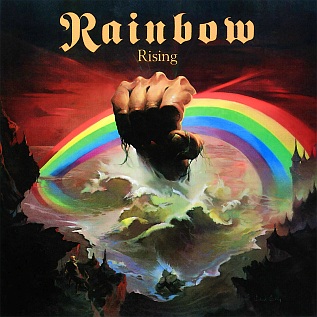
Rainbow
Rising
Six songs and no wasted motion. Blackmore’s guitar, Dio’s commanding voice and Cozy Powell’s thunderous drums turn fantasy into physical force, with “Stargazer” providing the towering centrepiece and “Tarot Woman” opening the gates in spectacular fashion.
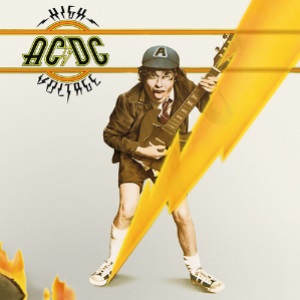
AC/DC
High Voltage
The international debut collects the best early Bon Scott-era material into a brutally efficient introduction. Malcolm Young’s rhythm guitar drives “Live Wire,” “T.N.T.” and the title track, while “It’s a Long Way to the Top” turns the hard road of touring into a permanent rock anthem.
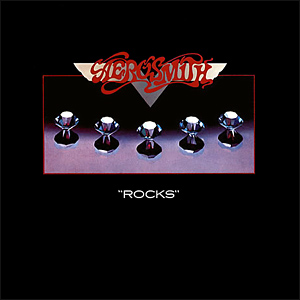
Aerosmith
Rocks
Aerosmith sounds lean, dirty and completely in command. “Back in the Saddle” announces the charge, “Last Child” brings the groove, and the oppressive riffing of “Nobody’s Fault” shows why later generations treated Rocks as a blueprint.
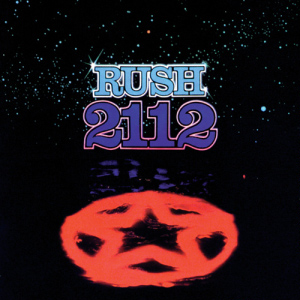
Rush
2112
Rush answers pressure to simplify with a twenty-minute science-fiction suite about individual expression. The title side gives the trio its breakthrough identity, while “A Passage to Bangkok” and “Something for Nothing” prove the shorter songs can carry equal force.
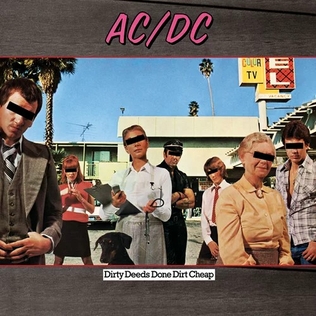
AC/DC
Dirty Deeds Done Dirt Cheap
Filed here by editorial exception: the album was released in Australia and Europe in 1976 but held back in the United States until 1981. Its title track, “Big Balls,” “Problem Child” and “Ride On” reveal every side of Bon Scott’s personality.
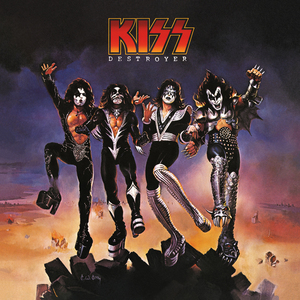
KISS
Destroyer
Bob Ezrin expands KISS without burying the hooks. Sound effects, children’s voices, orchestration and studio detail surround arena-sized songs, with “Detroit Rock City” and “God of Thunder” making the band sound as enormous as its stage show looked.
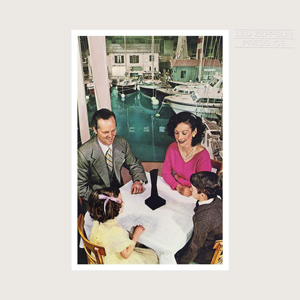
Led Zeppelin
Presence
Recorded under pressure, Presence is Zeppelin at its most guitar-focused and defiant. “Achilles Last Stand” races across ten monumental minutes, “Nobody’s Fault but Mine” rebuilds the blues as a heavy machine, and “Tea for One” closes in exhausted isolation.
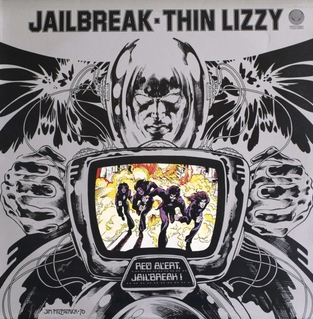
Thin Lizzy
Jailbreak
Phil Lynott’s street poetry and the Gorham-Robertson twin-guitar sound reach full strength. The title track and “The Boys Are Back in Town” delivered the breakthrough, while “Warriors,” “Cowboy Song” and “Emerald” make the album much deeper than its famous singles.
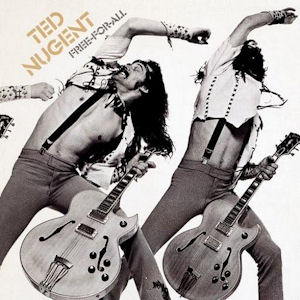
Ted Nugent
Free-for-All
Nugent’s second solo album keeps the guitar tone loud, dry and aggressive. Derek St. Holmes remains central, while a young Meat Loaf handles several lead vocals; together they give “Free-for-All,” “Dog Eat Dog” and “Street Rats” a restless hard-rock bite.
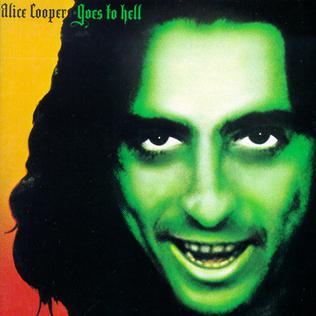
Alice Cooper
Alice Cooper Goes to Hell
The sequel to Welcome to My Nightmare sends Steven into a theatrical underworld. Bob Ezrin and Dick Wagner help Cooper move between hard rock, vaudeville and balladry, with “Go to Hell,” “Guilty” and “I Never Cry” anchoring the descent.
Judas Priest — Sad Wings of Destiny · Scorpions — Virgin Killer · Boston — Boston · Blue Öyster Cult — Agents of Fortune
Three needles to drop
Defining songs of 1976
Rainbow
“Tarot Woman”
Tony Carey’s synthesizer introduction creates the mystery before Blackmore’s riff tears through it. Dio sings with total authority and Cozy Powell drives every turn, making the opening track a compact preview of Rising’s fantasy and force.
AC/DC
“It’s a Long Way to the Top”
A road song with a riff tough enough to survive bagpipes joining the band. Bon Scott turns the unglamorous truth of touring into a chant, while the Young brothers keep the track moving with the precision of an engine built from rhythm guitar.
AC/DC
“Big Balls”
Bon Scott delivers every outrageous double meaning with mock-aristocratic dignity while the band plays it perfectly straight. The joke works because the groove is undeniable: AC/DC makes comedy hit with the same economy as its hardest riffs.
Reference shelf
Research notes
This chapter is original editorial writing cross-checked against official artist histories and discographies. The rankings reflect The Metal Pit’s approved 1976 selections. Dirty Deeds Done Dirt Cheap is included as a deliberate editorial exception: it was released in Australia and Europe in 1976 but did not reach the United States until 1981.