Heavy music entered 1975 with its foundations secure and its scale expanding. The year’s strongest records were not searching for a single definition of metal. They were testing how far the language could stretch: across a double album, into a theatrical nightmare, through progressive suites, into radio-ready American swagger and toward a more distinctly European style built on classical drama and fantasy. The result was a year of monuments rather than manifestos.
Physical Graffiti placed Led Zeppelin’s full range inside one enormous package. New recordings stood beside older unreleased material without making the album feel like a leftovers collection. “Custard Pie” and “The Wanton Song” carried hard, compact riffs; “In My Time of Dying” turned blues into a long electrical exorcism; “Ten Years Gone” supplied reflection; and “Kashmir” made repetition feel ceremonial. Zeppelin sounded less like one band working inside a genre than a genre-sized world of its own.
Aerosmith found its breakthrough voice on Toys in the Attic. Jack Douglas’ production kept the band’s dirt and swing while bringing the riffs forward, and “Walk This Way” joined Joe Perry’s instantly recognizable guitar figure to a rhythm that moved as much as it hit. The title track, “No More No More” and “Sweet Emotion” gave the album depth beyond its singles. Across the Atlantic, Nazareth’s Hair of the Dog delivered its own rough-edged accessibility, pairing Dan McCafferty’s sandpaper voice with the title track’s menace and the band’s enduring version of “Love Hurts.”
Theatre became another form of heaviness. Welcome to My Nightmare was Alice Cooper’s first solo album and a complete concept production, with Bob Ezrin helping move the story from vaudeville and cabaret to hard rock and horror. Queen’s A Night at the Opera pursued spectacle through the studio itself. “Death on Two Legs,” “I’m in Love with My Car” and “The Prophet’s Song” all mattered, but “Bohemian Rhapsody” became the audacious centrepiece: part ballad, part opera and part hard-rock detonation.
Rainbow pointed metal toward a different horizon. After leaving Deep Purple, Ritchie Blackmore joined Ronnie James Dio and musicians from Elf for Ritchie Blackmore’s Rainbow. “Man on the Silver Mountain” combined a simple, commanding riff with Dio’s mythic vocal presence, establishing a partnership that would grow even more powerful. Scorpions’ In Trance continued shaping a melodic German heavy-metal identity, while Thin Lizzy’s Fighting brought Scott Gorham and Brian Robertson’s twin guitars into sharper focus.
Black Sabbath remained restless on Sabotage. The legal and managerial turmoil surrounding the band fed an album that could move from the crushing directness of “Hole in the Sky” and the proto-thrash drive of “Symptom of the Universe” to the layered scale of “Megalomania.” Budgie’s Bandolier kept the underground tradition alive with eccentric grooves and hard riffs, while Ted Nugent’s solo debut turned “Stranglehold” and “Stormtroopin’” into American guitar showcases built for the road.
AC/DC’s rise belongs in the year’s story even though the band does not appear in this Top 10. The Australian High Voltage and T.N.T. albums established the Bon Scott lineup at home, but neither original LP received a North American release in 1975. Much of that material reached the wider international market on 1976’s reconfigured High Voltage. Under this archive’s North American availability rule, AC/DC waits one more year—but the fuse was already lit.
From the Pit
Blake’s Take
Physical Graffiti is a monster of a double album, packed with so many Led Zeppelin classics that it never feels short on great material. Alice Cooper’s Welcome to My Nightmare is also one of my all-time favourite albums, and it is the only Cooper record I still revisit today. What probably says the most about the strength of 1975 is that every album in this Top 10 still has a place in my massive playlist. Unlike some of the earlier years, there is not a single record here that has completely fallen out of my listening rotation.
On the archive wall
Four moments that mattered
February
Zeppelin fills four sides
Physical Graffiti turns a double album into a complete map of the band’s power, range and accumulated history.
March
Alice enters the nightmare
Alice Cooper’s first solo album transforms horror theatre into a fully staged concept record and concert spectacle.
August
Rainbow rises
Blackmore and Dio begin a partnership that gives heavy metal a new language of fantasy, melody and guitar drama.
Australia
AC/DC lights the fuse
High Voltage and T.N.T. establish the Bon Scott lineup, though neither original album reaches North America in 1975.
The essential records
Top 10 albums of 1975
The Metal Pit’s approved ranking, filed with the original album artwork.
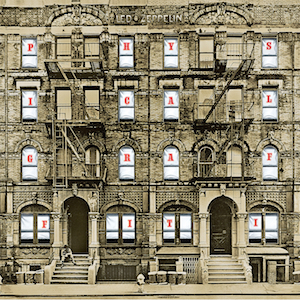
Led Zeppelin
Physical Graffiti
A double album that feels bigger than its running time: bruising riffs, acoustic colour, deep blues and strange grandeur assembled into one vast statement. “Kashmir” is the centre of gravity, but every side reveals another version of Zeppelin.
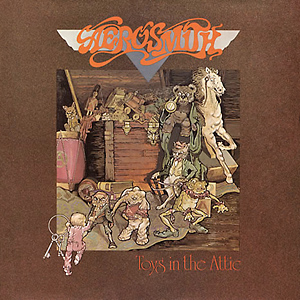
Aerosmith
Toys in the Attic
Aerosmith turns club-tested swagger into a breakthrough without polishing away the grime. “Walk This Way” and “Sweet Emotion” became permanent radio fixtures, while the title track and “No More No More” keep the album fast, hungry and dangerous.
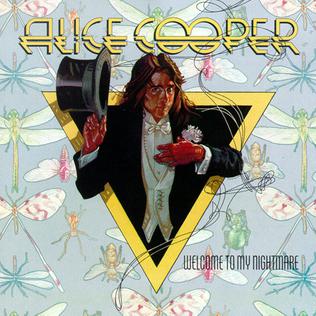
Alice Cooper
Welcome to My Nightmare
Alice Cooper’s solo debut builds an entire nightmarish stage world out of hard rock, cabaret, balladry and black humour. Bob Ezrin’s production makes the transitions cinematic, while “Only Women Bleed” and the title track give the spectacle lasting songs.
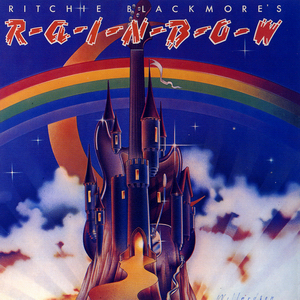
Rainbow
Ritchie Blackmore’s Rainbow
Ritchie Blackmore’s guitar and Ronnie James Dio’s voice meet at exactly the right moment. “Man on the Silver Mountain,” “Sixteenth Century Greensleeves” and “The Temple of the King” make fantasy feel muscular and point toward metal’s coming European evolution.
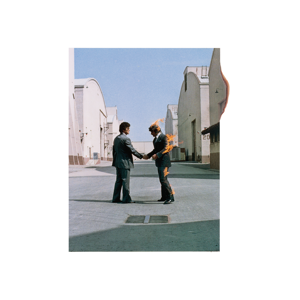
Pink Floyd
Wish You Were Here
An album about absence that somehow feels overwhelmingly present. “Shine On You Crazy Diamond” surrounds the record with patient, elegiac scale, while the title track keeps the emotion human beneath the immaculate sound.
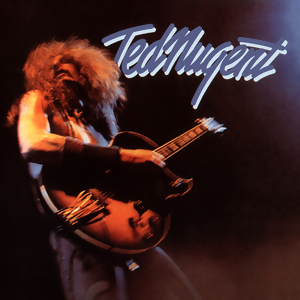
Ted Nugent
Ted Nugent
The former Amboy Dukes guitarist begins his solo run with a record built around tone, groove and extended guitar fire. “Stranglehold” is the towering jam, while “Stormtroopin’” gives the album a tough American hard-rock backbone.
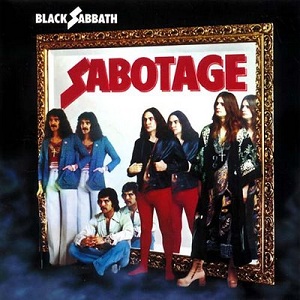
Black Sabbath
Sabotage
Sabbath sounds furious, adventurous and cornered. “Hole in the Sky” hits immediately, “Symptom of the Universe” drives toward thrash, and “Megalomania” stretches the band’s darkness into an elaborate progressive nightmare.
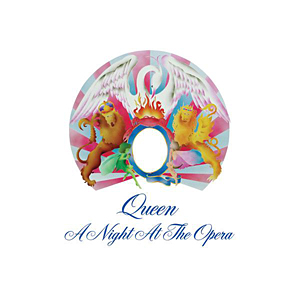
Queen
A Night at the Opera
Queen treats the studio as an instrument and excess as a creative method. Hard rock, vaudeville, folk and layered vocal architecture collide, with “Bohemian Rhapsody” turning impossible ambition into a worldwide anthem.
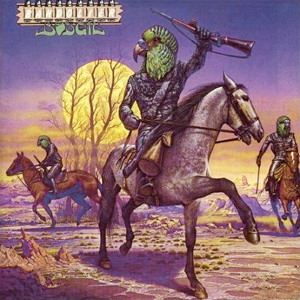
Budgie
Bandolier
Budgie’s fifth album balances the trio’s eccentric heaviness with a warmer sense of groove. “Breaking All the House Rules” charges out of the gate, and “I Can’t See My Feelings” became another deep Budgie cut carried forward by metal musicians.
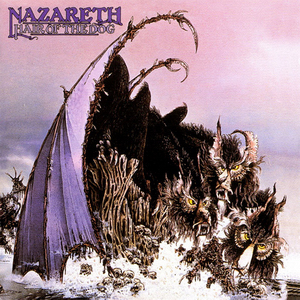
Nazareth
Hair of the Dog
The Scottish band’s defining record is rough, direct and built around Dan McCafferty’s unmistakable rasp. The title track brings the hard-rock bite, while “Love Hurts” shows how convincingly Nazareth could turn vulnerability into power.
Thin Lizzy — Fighting · Scorpions — In Trance · Rush — Fly by Night · AC/DC — T.N.T. (Australian release)
Three needles to drop
Defining songs of 1975
Led Zeppelin
“Kashmir”
A monumental riff moving against John Bonham’s drums while strings and brass widen the horizon. Its hypnotic architecture makes eight and a half minutes feel less like a song than a procession through another landscape.
Aerosmith
“Walk This Way”
Joe Perry’s opening riff is a hook before Steven Tyler says a word, but the rhythm is the secret weapon. Funk, hard rock and streetwise vocal phrasing lock together in a track built to move as hard as it hits.
Rainbow
“Man on the Silver Mountain”
Blackmore strips the riff to something elemental and Dio fills the open space with command, mystery and myth. It is the first great statement from a partnership that would reshape heavy metal.
Reference shelf
Research notes
This chapter is original editorial writing cross-checked against official artist histories and discographies. The rankings reflect The Metal Pit’s approved 1975 selections. AC/DC’s original Australian 1975 albums are excluded from the Top 10 because neither received a North American release that year.