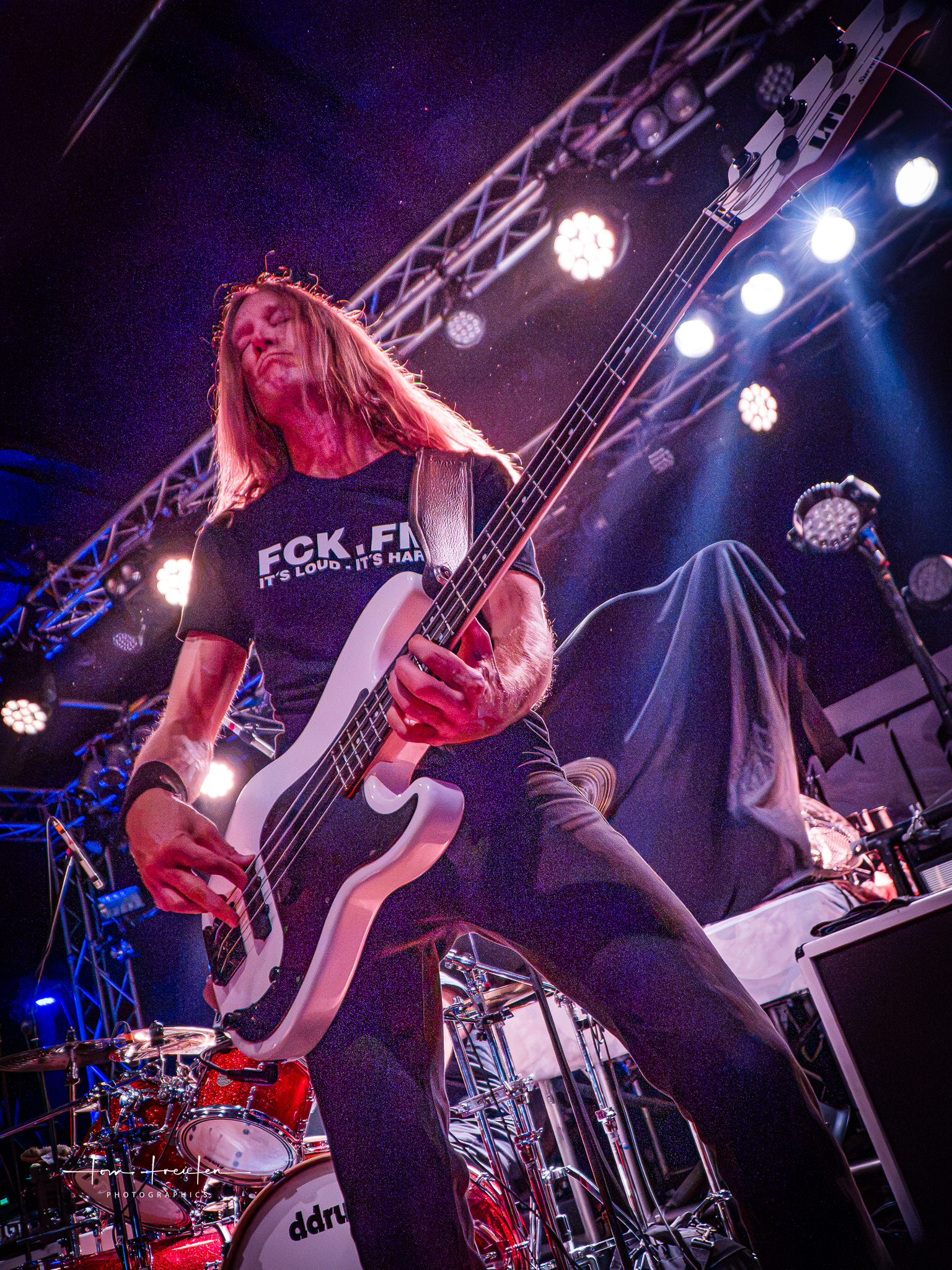
Damien Sisson of Death Angel
The Death Angel bassist discusses the band’s enduring energy, revisiting Act III, creating new music and building Shake N Bake Records.
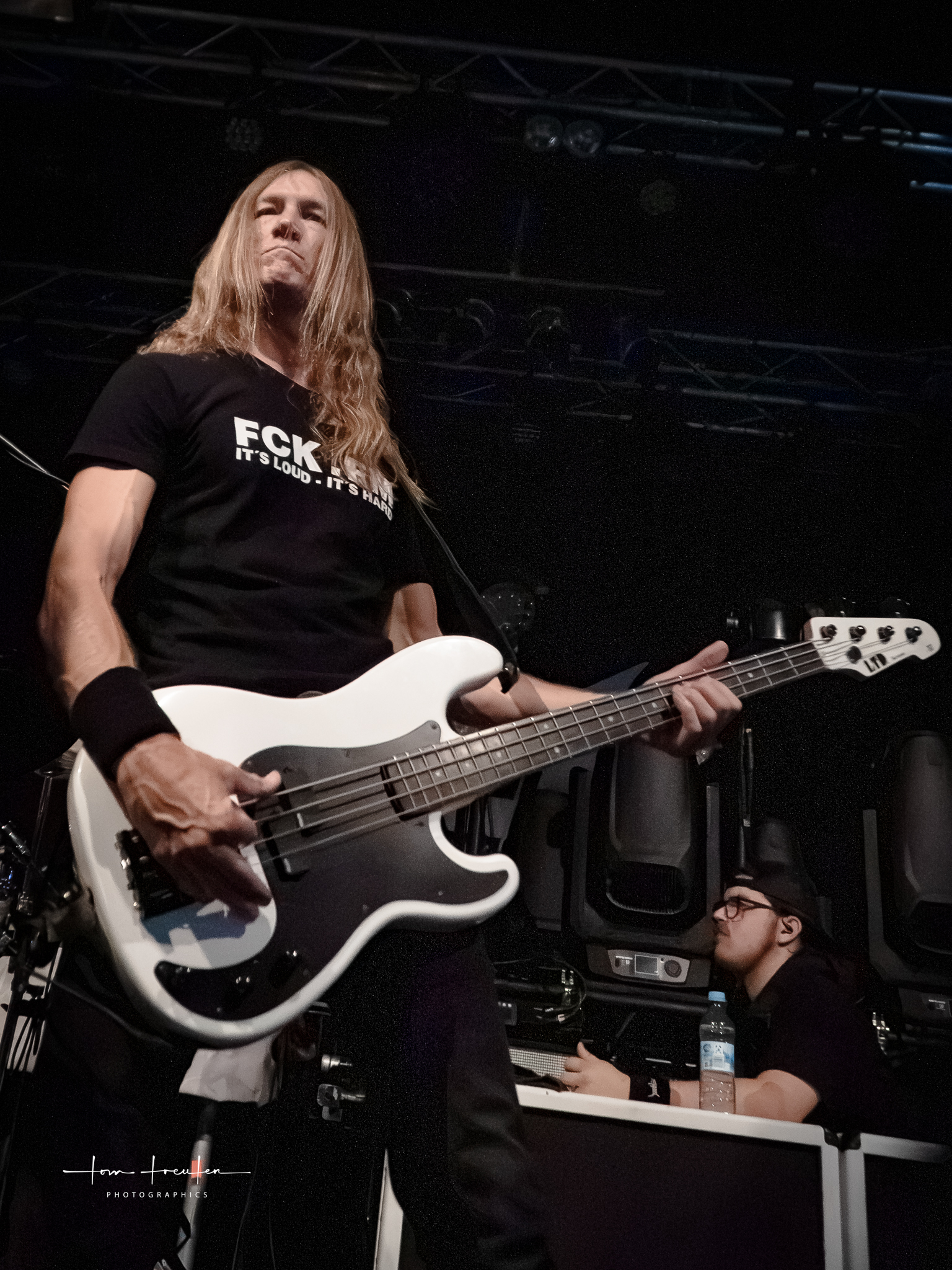
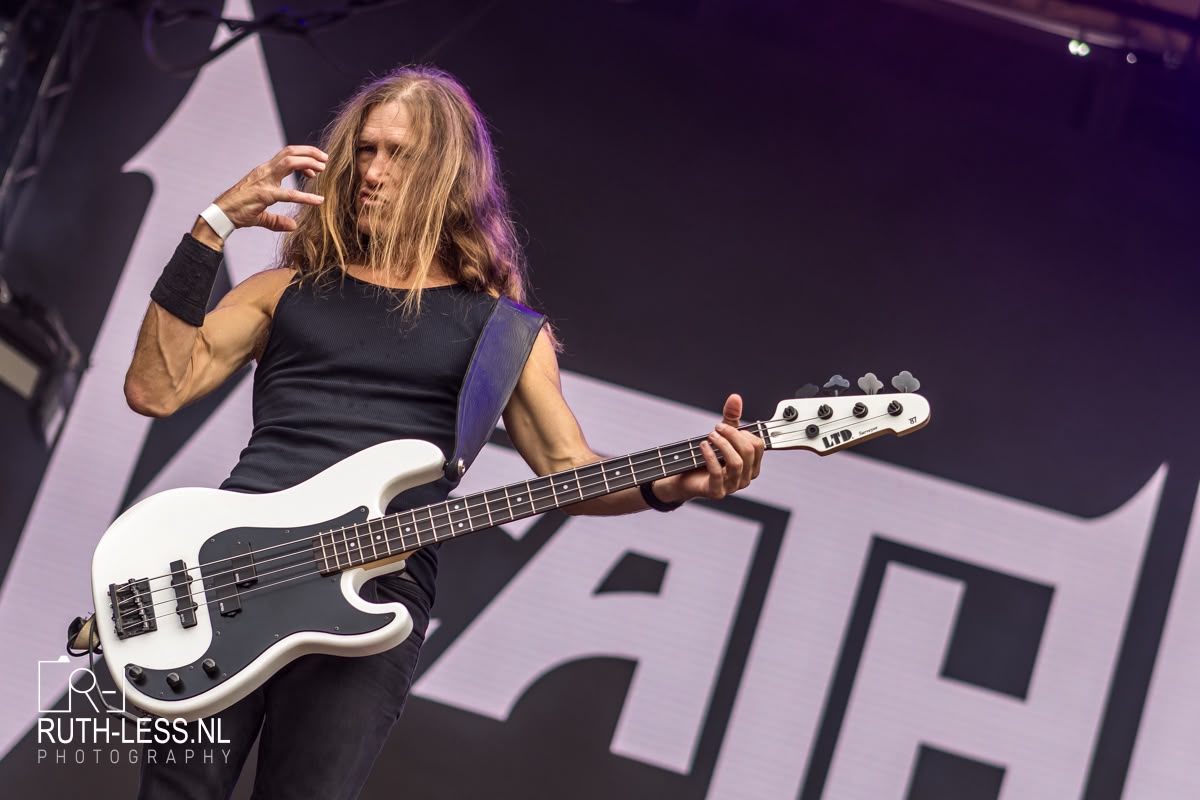
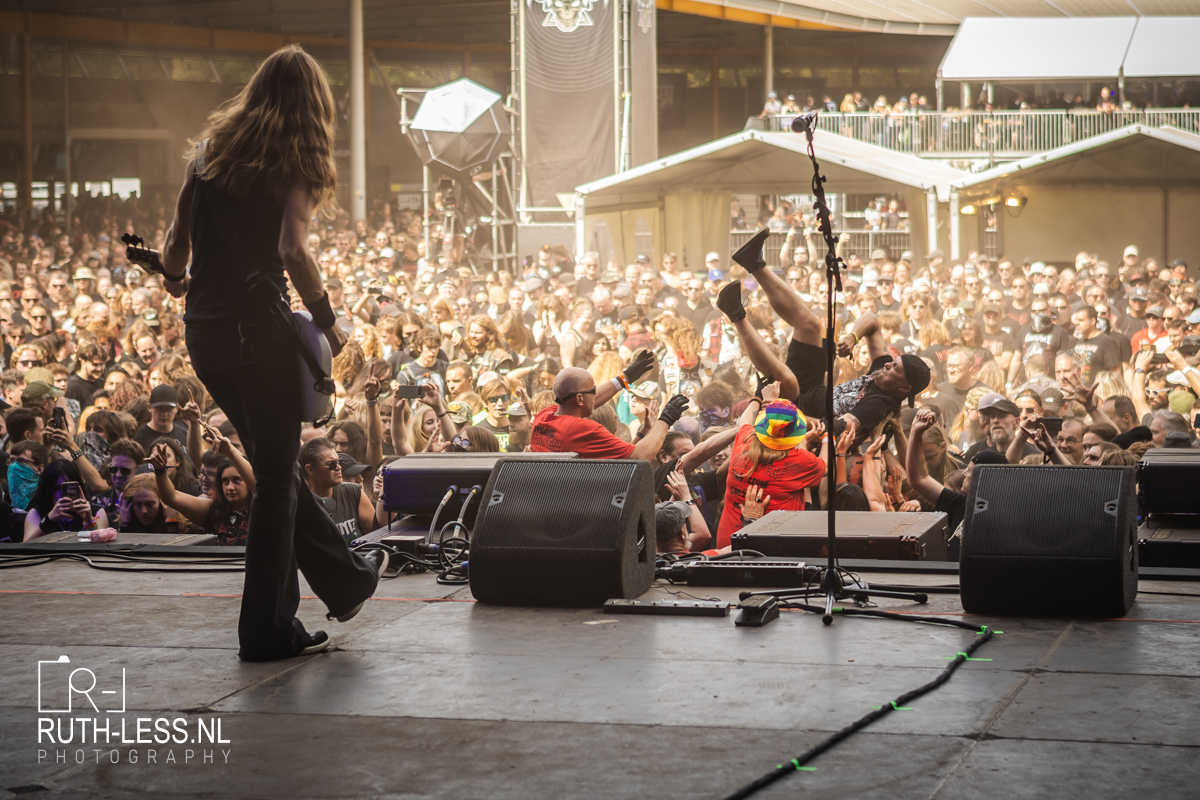
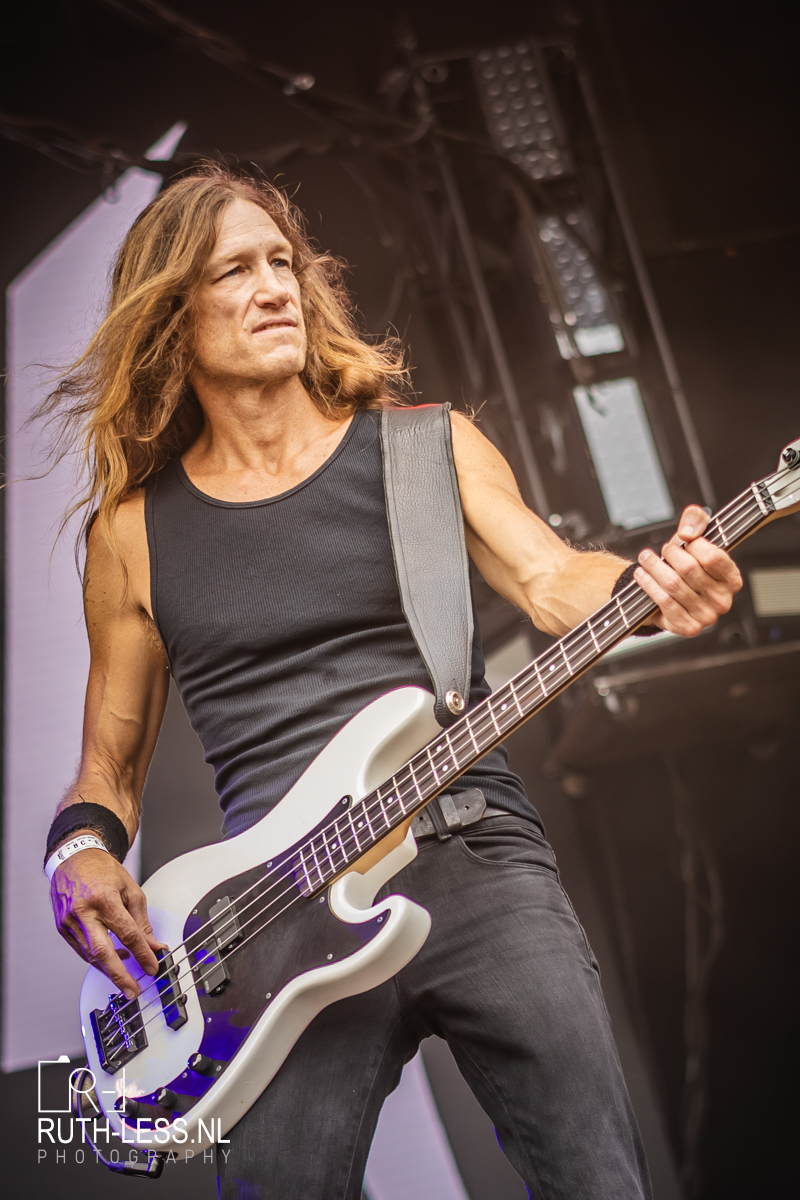
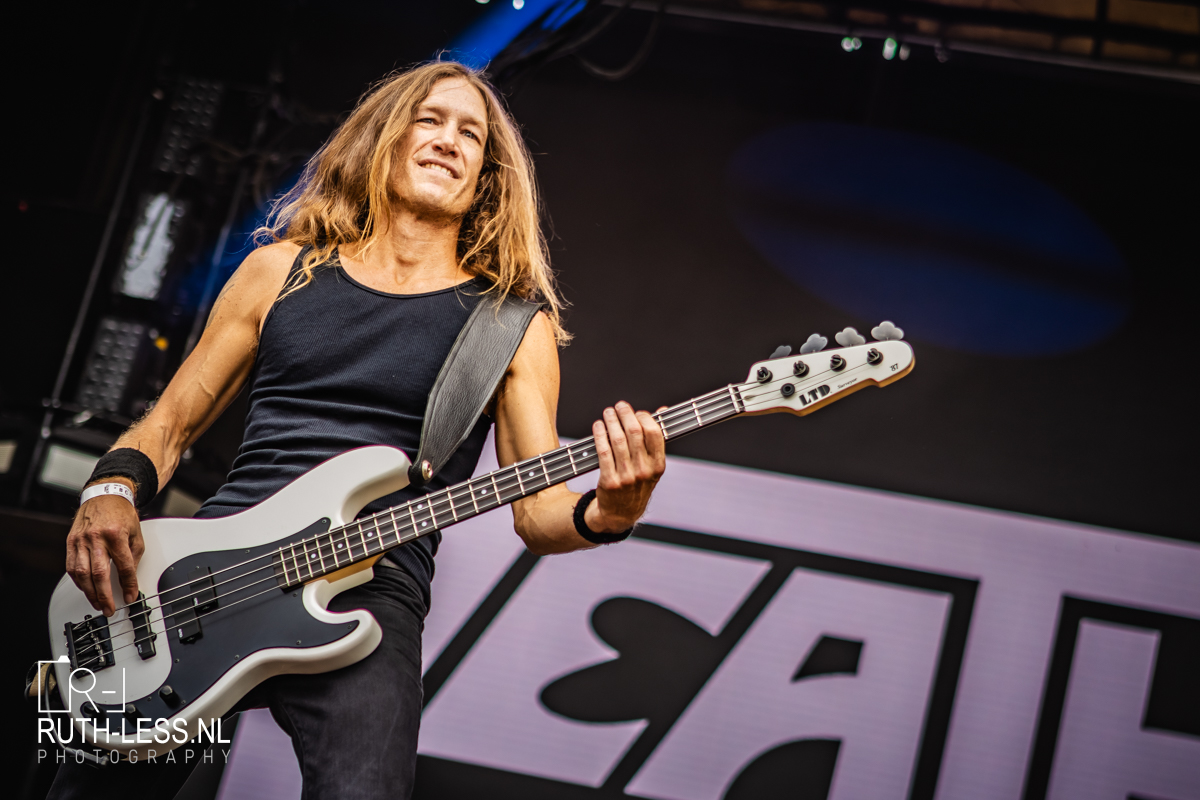
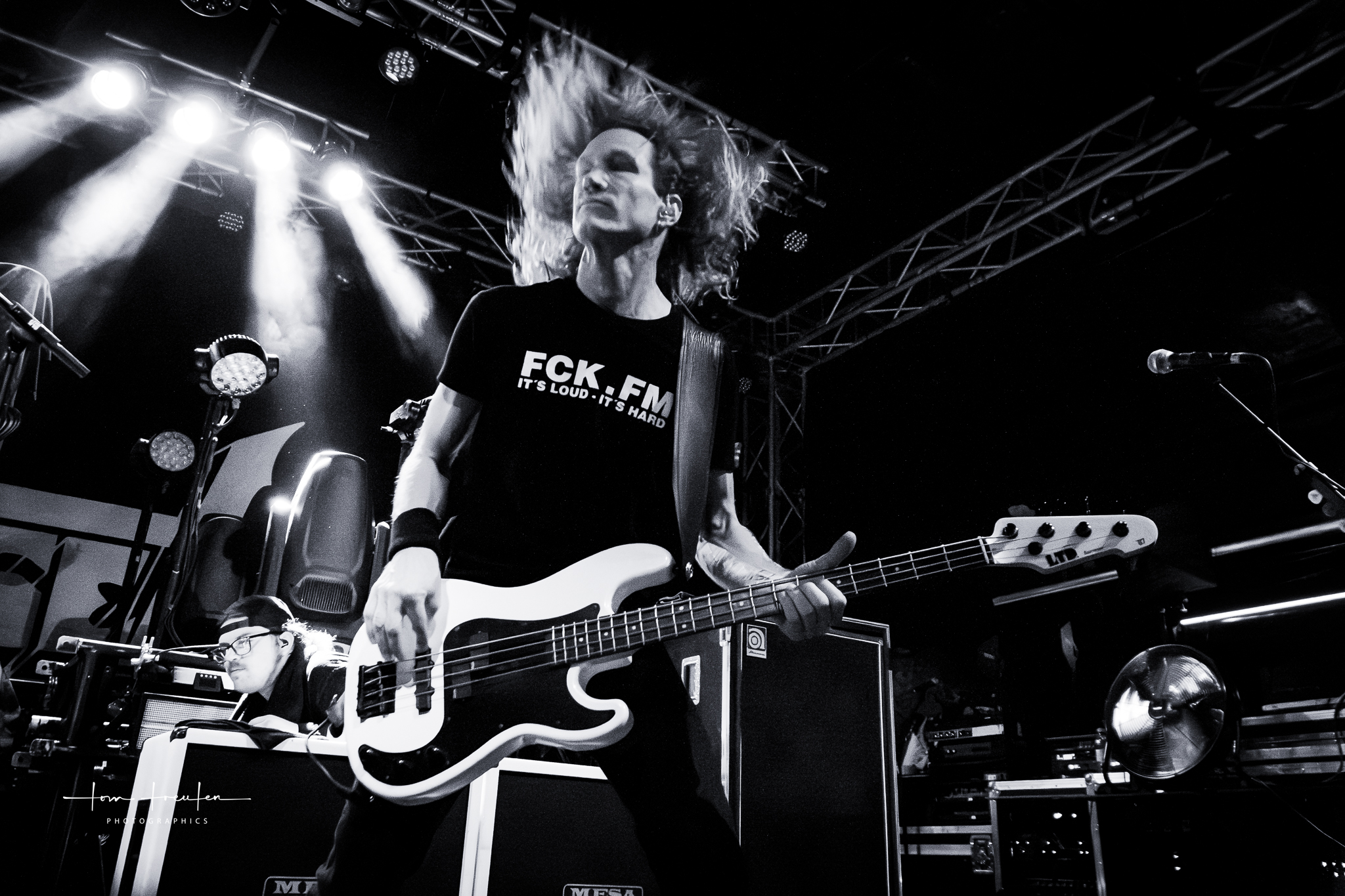
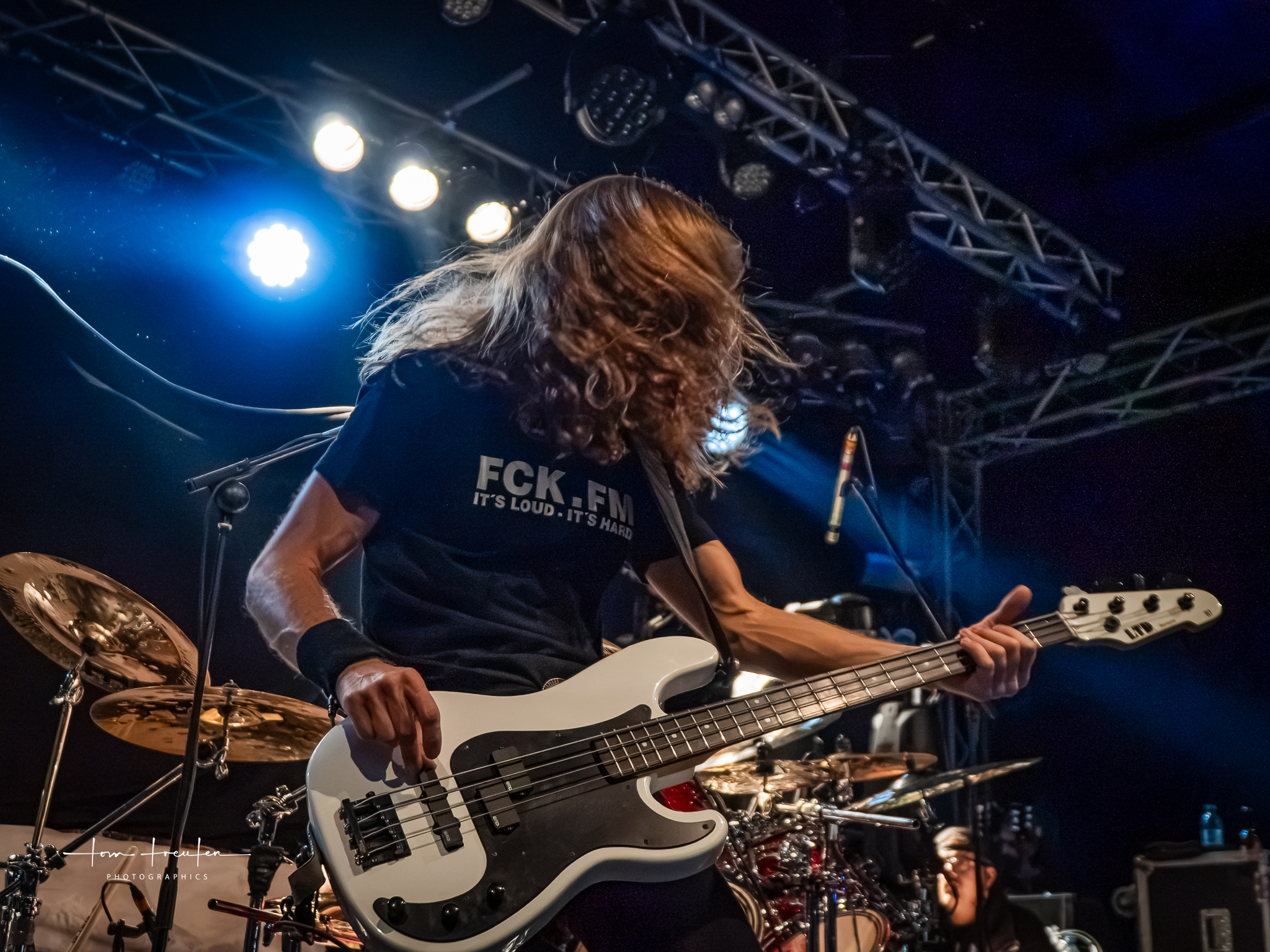
Photo credits: Ruth-Less Concert Photography and Tom Treuten Photography
After more than fifteen years with Death Angel, bassist Damien Sisson remains driven by musical growth, live performance and the simple joy of creating. He spoke with The Metal Pit about his history with the Bay Area thrash veterans, the evolution of his playing and his creative work beyond Death Angel.
1. Do you remember your first experience hearing Death Angel, and what initially stood out to you about the band?
My first experience listening to Death Angel came from a roommate I had in 2001.
At that time, I was living in the garage of a friend I’d made at the gym. We became friends over our love of Death, Meshuggah and a few other bands that weren’t popular in our area at the time. This fellow was a few years older than I, so he experienced a lot of things in the Bay Area that I’d just missed out on, and he was also a HUGE Death Angel fan. At this point, the band had been broken up for almost 10 years, CDs were hard to come by, and eBay wasn’t a thing yet, so he’d show me VHS bootlegs of Death Angel at the River Theater in Guerneville. Northern California, right there where I was from.
Coincidentally, around that same time, the “Thrash of the Titans” benefit show for Chuck Schuldiner and Chuck Billy was announced. My roommate and I, we stood in line to get tickets. And that there was where I saw Death Angel for the very first time.
The thing that stood out about this band was, and is, the energy… The way they performed reminded me of my buddies and me, and how we would play at our own shows. Just full of energy, excitement and bravado.
I remember thinking how much they put into performing for the crowd.
2. You joined Death Angel in 2009. How has your role within the band evolved since those first rehearsals and shows?
Playing within a band is a relationship, and for any relationship to work, it requires adapting to the others in the relationship.
As a bassist within a band that has pretty clear direction, my role has continued to be MORE supportive; supportive in ways that aren’t always musical. Keeping the vibe right, reacting to the room and reading the audience. When we go out, it’s not just the five guys on stage. We have bus drivers, crew, other bands and band members, their crew, the local crew…
I try and reinforce that we’re out here playing and making music with gratitude. We’re thankful for the opportunity, we appreciate the people who are making it happen for us, and we want to celebrate with our friends, family and crew, no matter what city or country we’re in.
So, if a guitar cuts out, or a cymbal falls over—it’s cool, man—it’s all rock ’n’ roll, and we’re still going to have a good time with anyone who wants to be part of it. So, I try and keep the vibe right so we can hit the stage just right and do our thing.
Musically, as they say, “less is more.”
My role is still, as it’s always been, to listen to the players around me, react to what they’re playing—how they’re playing—and try to simplify my parts and create space for the music to move right—nothing too excessive, just giving the song what it needs at that particular moment.
3. Who were the bassists who most influenced you while you were developing your own playing style?
This is a loaded question, because my own playing style is always developing.
I’m a developing bass player because I’m a developing musician, and there’s always more to add to my bag as a musician and a bass player.
When I began, I was happy playing Nirvana, Metallica, Pink Floyd and Black Sabbath.
Soon, I’d look at Rush, King’s X, Yes…
Then Faith No More, Tool, Living Colour.
Other influences started to come in like Victor Wooten, Stanley Clarke, Jaco Pastorius…
Bootsy, Marcus Miller, Louis Johnson…
And then James Jamerson and Chuck Rainey…
The list of players who continue to influence me is never-ending.
So, my playing style continues to develop as I find new music and understand who the musicians are behind the songs.
4. After more than fifteen years as a member of Death Angel, what still excites you most about the band, and what can fans expect next?
What is most exciting is that we still get to do this…
We’ve seen friends and bros fall by the wayside along the way.
Families, children, old age, health… Not everyone can keep going and sustain doing what we do for 15-plus years.
We don’t know how long we get to do this, so let’s enjoy every moment that we can of it.
I also feel like we’re still getting better, adapting to the conveniences that have developed in sound and gear…
Having in-ear monitors makes our performances tighter—our sound guy can properly mix us—our techs have less gear to load—sound checks go quicker and smoother…
Fans can expect better live performances and for us to continue to improve as players.
And I’d imagine we’re due for a new studio album…
5. Death Angel’s songs feature plenty of intricate guitar work. How do you find space for the bass without overcrowding the arrangements?
Very importantly in metal is for the bass player to not “get in the way.”
The bass can dominate the sound if it’s too busy too much.
Usually, this results in the bass being turned down in the mix.
I think it’s important to counterweight the guitars—find where to add a bit of bounce, or even groove, while still accenting the chugs and gallops that are essential to making it heavy.
More important than adding a bunch of notes is reminding the listeners and the band where the “one” is.
If I’m doing a lick, it’s to set up the first beat of the measure, or bar.
Or let the band know we’re going into a change.
Like, “Hey, we’re going into the chorus!” Play bass lick!
I also try to pulse a bit on the “one”—imply a bit of the “four on the floor” pump underneath the fast 16th notes and movement.
It’s not always about matching, but finding a spot to add some syncopation and add some movement.
I find this approach more suitable than trying to play every note the guitars are playing, or worse yet, play more than them.
6. Death Angel have been celebrating the 35th anniversary of Act III. Has revisiting the album given you a new appreciation for its bass playing and arrangements?
Studying up on Act III, and hearing the subsequent stories, gives me a different appreciation for how important this album is to Death Angel’s legacy, and those who grew up with the album.
From the musical perspective, it’s always impressive to think back to a pre-digital age, and knowing that time is money—every take in the studio you don’t nail will waste tape and cost money. That pressure made for a different type of performance—one where they really felt the need to put it all on the line.
In today’s recording atmosphere, a musician has however many takes are needed to get it right without any type of real consequence on the line.
Now, there’s K-Cup coffee at your disposal, and Uber Eats delivering when your tummy hurts, no tape getting wasted when you didn’t nail your part…
The times were different…
It’s really cool to remember back to when being in a band was really like your gang—your posse—the homies you grew up with, learned to get down with.
Listening to this album brings me back to a time when music seemed purer.
7. Which song from Act III is the most enjoyable for you to perform, and which presents the greatest challenge?
Playing “Stagnant” is always a lot of fun because it’s got that groovy and heavy intro, then goes to a funky, almost new-wave, thing in the verses…and every time it goes back to that main riff…it just hits right. So, probably gonna hafta say that one.
As far as most difficult, it’s a two-way tie for “A Room With a View” and “Veil of Deception.” The reason being is every note is important and essential, and if I blow one note, it really harshes the vibe—it’s not something you can brush off easily—because those songs are very melodic and when one note is wrong, or misplaced, the whole sound and vibe gets sour until I can get back on track.
For how delicate those songs are, the responsibility feels heavier.
8. When performing older Death Angel material, do you remain faithful to the original bass lines or allow more of your own style to come through?
What I did when I joined the band was listen to what Den did on their most recent live album at that time (Sonic German Beatdown). I picked out the licks and types of things he was doing there.
Bands tend to evolve their songs over the years… If I were to play exactly what Den played on the OG recordings, probably it wouldn’t fit with how the band plays those songs now. So, I try to get the idea of where Den was improvising parts and when and where to stick tight. If I can make something sound smoother, I’ll usually go with that option.
As time goes on, the songs evolve even more, and with Will being a different drummer than Andy—as much as I can keep the essential Den parts intact, I also make adjustments for how the band presently plays.
9. “Wrath (Bring Fire)” and “Cult of the Used” were Death Angel’s first new songs in several years. How did those tracks come together from your perspective?
During the pandemic, we went on a writing frenzy. I’d get demos from Rob and Will, record on them, send them back, they’d revise parts…and this was going on for probably about 12 songs or so…just demoing back and forth.
Finally, one of the guys got the idea to record three of the tracks with the intent of releasing them at some point. And so, “Wrath” and “Cult” came out of this writing session.
10. How involved are you in the songwriting and arrangement process when Death Angel begin developing new material?
I’m really a bit of “parsley on the plate” when it comes to contributing.
The majority of the riffs and ideas for these songs come from Rob, who then goes over the parts with Will.
Rob usually has an idea of how he’d like the drums to go, but Will puts his thing on it, and once they’ve got some rough “guitar ’n’ drums” demos, they send them to me. I put my bass on it and send it back.
I’d say one out of every five songs, Rob comes back at me and says, “Try this out,” or “Don’t do that one thing,” but other than that, I try and make sure I’ve got some strong ideas solidified before I send anything back. That saves us from too much back and forth, as that can become a drag when the ideas aren’t lining up.
Then, we get in the studio, and everything we worked on with the demos has changed completely, and we just figure it out as we go.
11. Humanicide earned Death Angel their first Grammy nomination. Did that recognition create additional pressure while working on its follow-up, and what can you reveal about the new album?
Winning a Grammy couldn’t have created too much pressure to release a follow-up quickly, because it’s been eight years and we still haven’t released anything. We better have a Terminator 2 of a follow-up album after that Grammy nomination, because eight years is an absurd amount of time to wait for a follow-up.
12. Death Angel will be touring Europe with fellow Bay Area veterans Vio-lence. What kind of relationship do the two bands have after sharing the same scene for so many years?
Those dudes are our bros, don’t know what more there is to say.
We’ll be sharing a bus with them, so definitely going to know each other even better after this tour coming up.
But they’re great to share the stage with. They’re always getting people pumped up, never slacking, and always having beers and laughing after the day’s job is done.
So, we’re good, we like touring with them, like so many of our Bay Area brothers.
13. What inspired you to establish Shake N Bake Records, and when did you first begin developing the idea?
Shake N Bake Records came about simply from having an excess of music. My friends, me…we have songs and music that don’t always fit in with our bands, so as a means of releasing those songs, it made sense to start a label and build something of our own. No pressure in the traditional ways: no huge overheads or needing to create so many songs or go on tour…it’s a “lower-stakes means” to staying creative and collaborating with friends from over the years. We still love to play music and have fun making music, and it’s not always about being in a big band and dominating the universe… Sometimes, it’s just about you, and some songs, and your friends jamming along altogether.
14. What has operating your own label taught you about the business side of music that you didn’t experience as a recording artist?
There are a lot of details to making music work professionally.
Not just the recording, mixing, mastering…but marketing, publicity, Performing Rights Organizations, sync royalties, filing as an LLC…there’s a lot that goes into it.
However, a good number of things you only have to set up once and then it’s on cruise control, like syncs and publishing…once you’ve got those set up, maintaining them becomes less demanding.
But the industry has changed drastically, and it’s almost like playing the market—you have to keep up daily with the new things happening in the music industry, because changes are happening fast and constantly.
Trying to keep up with trends, stuff like social media and content-building, what they demand of the artist, the music and label are changing constantly. It takes research to understand what the best way is to release a song as an independent artist and label—there’s no manual for how to do this, just have to improvise, adapt and, with perseverance, overcome.
15. Mystics of Tomorrow is described as the label’s in-house band. How does its collaborative format work when you begin creating a new song?
I’d liken Mystics of Tomorrow to the label’s “Muscle Shoals Band,” the studio guys from Nashville who played on all kinds of people’s albums.
Mystics of Tomorrow is simply a collective of people who all help each other to get their music completed.
Depending on who’s “heading” the song, the other players may play more interpretational parts, or may play very strictly written parts…depends, mainly, on whose song it is.
Often, on the songs I’ve led, I have a pretty good idea of what I want to hear. I then challenge the other players to come up with something better or more interesting, which typically leads to results that are better than expected.
But we’ve got a few drummers depending on the type of song, same goes for guitar players…and a few different studios we use, depending on the recording’s needs.
We just work the songs until it’s time to release ’em.
16. Mystics of Tomorrow crosses several musical genres. Was creating something free from the expectations of Death Angel and thrash metal an important reason for starting the project?
I think it’s important for me to have a creative outlet where I can challenge myself to learn and understand in new ways.
Death Angel plays a specific brand and genre of music, and I think we do it well, so why mess with a winning formula by trying to force it to be something else.
Mystics of Tomorrow and Shake N Bake Records are a means to be able to stay creatively free from expectations, while also giving myself experience and the scenarios needed to learn and gain the skills that can help me become a more complete and capable musician.
17. How do you choose the singers, musicians and songwriters who will be the right fit for each Mystics of Tomorrow track?
Many of the musicians and collaborators from Mystics of Tomorrow and Shake N Bake Records are friends from over the years.
Having played in several bands before Death Angel, and made friends along the way who’ve all contributed to my own playing and development, it’s come full circle where we now have a medium to create and play music like we’ve always wanted.
Studio, releasing, recording, all of that is much more possible on an individual’s schedule, and as long as we all agree to aim for a deadline, things get done.
The singers on the songs released are just some of the people who were available and able to meet a deadline.
18. Death Angel guitarist Rob Cavestany appears on “Forgotten Ones.” How did that collaboration develop, and is working together outside Death Angel a different experience?
Rob is one of the guys who still practices and plays his guitar.
Some time before the pandemic, I’d been futzing around in the back of the tour bus with some songs.
When the pandemic hit, I found myself putting some of those “back of the bus” jams together while learning the basic “how-to” of home recording.
I’d reached out to a few different buddies, Rob being one of them, to see who wanted to add some parts to the songs I was constructing. I kept instruction deliberately vague so that people could come up with their own parts and feel their muse.
Rob took a liking to a track called “Forgotten Ones.”
I really can’t say how long he worked on his parts, but when he sent his parts to me, I really didn’t do much modifying—I just plugged them in and worked the song around the existing parts.
I enjoy all the ways of making music, whether in the same room hashing out ideas, or getting parts in my email and cutting them up…
…It’s all part of the search for the perfect song.
19. Your solo piece “Memories Lost (Tears in the Rain)” is deeply personal and built around unaccompanied bass. What inspired the song and your decision to reveal that side of yourself musically?
I suppose I had a few reasons for releasing an unaccompanied bass piece.
First, and most pragmatically, I needed a song released under my own name in order to get a “check mark” on Spotify and YouTube. And it worked.
However, I’ve always been attracted to the idea of a solo bass piece, largely because of Victor Wooten’s first solo album, in which all the songs were solo bass.
I think it’s just an amazing tribute to bass…something like what the Cello Suites by Bach are to the cello as a solo instrument, that first Victor Wooten album is to the versatility of the bass.
Playing in mostly metal bands, I wanted to play something that showed another side of my playing.
The song was written after having heard of the passing of Bill Withers. We lost a lot of celebrities and heroes in recent years, but I’d been listening to a lot of Bill Withers prior to his passing, and it felt oddly coincidental that someone I was really getting into would come to pass during that time. It just hit me…
I used the song as an epitaph to the people who’ve inspired and left us with memories.
20. You’ve expressed an interest in composing for movies, video games and commercials. How does that fit into your long-term plans, and what is coming next from Mystics of Tomorrow and Shake N Bake Records?
Well, you know, I’ve started to realize how music from movies, cartoons and video games has influenced my listening and life.
Whether it’s the Jaws theme, or “Bloody Tears,” or the soundtrack to Shutter Island…there are so many different ways music moves emotions than just being in a band.
I would love to explore the other avenues in which music communicates and evokes feelings.
As for Shake N Bake Records, we do have our newest band, Velvet Mirage, debuting in October. This band is a surprise from the other artists on the label.
Velvet Mirage is a dark/heavy synthwave band, a little post-punk/early new wave, but isn’t purely a nostalgia act.
Velvet Mirage pushes a bit in the heavy direction and brings in some aggressive parts in between those moments of dance-floor bliss.
Soon, Shake N Bake Records will be switching to a singles format that’s reminiscent of the early days of records, when there was an A-side and a B-side.
People are asking for physical product, which I realize we do need to get rolling on.
By going back to the A-side/B-side format, it pushes the artists along a bit to getting closer to the required length of an “LP record.”
Sadly, it just doesn’t make much sense to print EPs to vinyl, and an LP requires 35 minutes of music.
We’ll be pushing to get this music up to length and released on vinyl as soon as possible.
Contents
- 1 Damien Sisson of Death Angel
- 1.1 1. Do you remember your first experience hearing Death Angel, and what initially stood out to you about the band?
- 1.2 2. You joined Death Angel in 2009. How has your role within the band evolved since those first rehearsals and shows?
- 1.3 3. Who were the bassists who most influenced you while you were developing your own playing style?
- 1.4 4. After more than fifteen years as a member of Death Angel, what still excites you most about the band, and what can fans expect next?
- 1.5 5. Death Angel’s songs feature plenty of intricate guitar work. How do you find space for the bass without overcrowding the arrangements?
- 1.6 6. Death Angel have been celebrating the 35th anniversary of Act III. Has revisiting the album given you a new appreciation for its bass playing and arrangements?
- 1.7 7. Which song from Act III is the most enjoyable for you to perform, and which presents the greatest challenge?
- 1.8 8. When performing older Death Angel material, do you remain faithful to the original bass lines or allow more of your own style to come through?
- 1.9 9. “Wrath (Bring Fire)” and “Cult of the Used” were Death Angel’s first new songs in several years. How did those tracks come together from your perspective?
- 1.10 10. How involved are you in the songwriting and arrangement process when Death Angel begin developing new material?
- 1.11 11. Humanicide earned Death Angel their first Grammy nomination. Did that recognition create additional pressure while working on its follow-up, and what can you reveal about the new album?
- 1.12 12. Death Angel will be touring Europe with fellow Bay Area veterans Vio-lence. What kind of relationship do the two bands have after sharing the same scene for so many years?
- 1.13 13. What inspired you to establish Shake N Bake Records, and when did you first begin developing the idea?
- 1.14 14. What has operating your own label taught you about the business side of music that you didn’t experience as a recording artist?
- 1.15 15. Mystics of Tomorrow is described as the label’s in-house band. How does its collaborative format work when you begin creating a new song?
- 1.16 16. Mystics of Tomorrow crosses several musical genres. Was creating something free from the expectations of Death Angel and thrash metal an important reason for starting the project?
- 1.17 17. How do you choose the singers, musicians and songwriters who will be the right fit for each Mystics of Tomorrow track?
- 1.18 18. Death Angel guitarist Rob Cavestany appears on “Forgotten Ones.” How did that collaboration develop, and is working together outside Death Angel a different experience?
- 1.19 19. Your solo piece “Memories Lost (Tears in the Rain)” is deeply personal and built around unaccompanied bass. What inspired the song and your decision to reveal that side of yourself musically?
- 1.20 20. You’ve expressed an interest in composing for movies, video games and commercials. How does that fit into your long-term plans, and what is coming next from Mystics of Tomorrow and Shake N Bake Records?