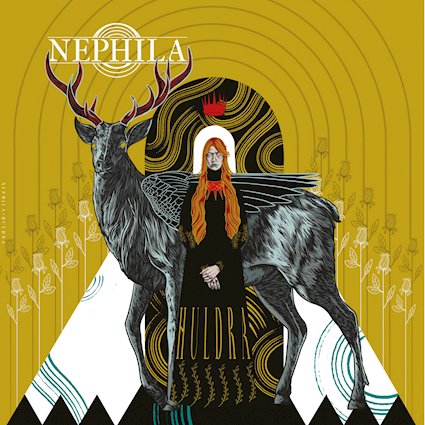
Nephila – Huldra
Band: Nephila
Album: Huldra
Genre: Hard Rock / Metal
Label: Majestic Mountain Records
Release Date: August 28, 2026
Review by: Negalithic
Rating: 9/10
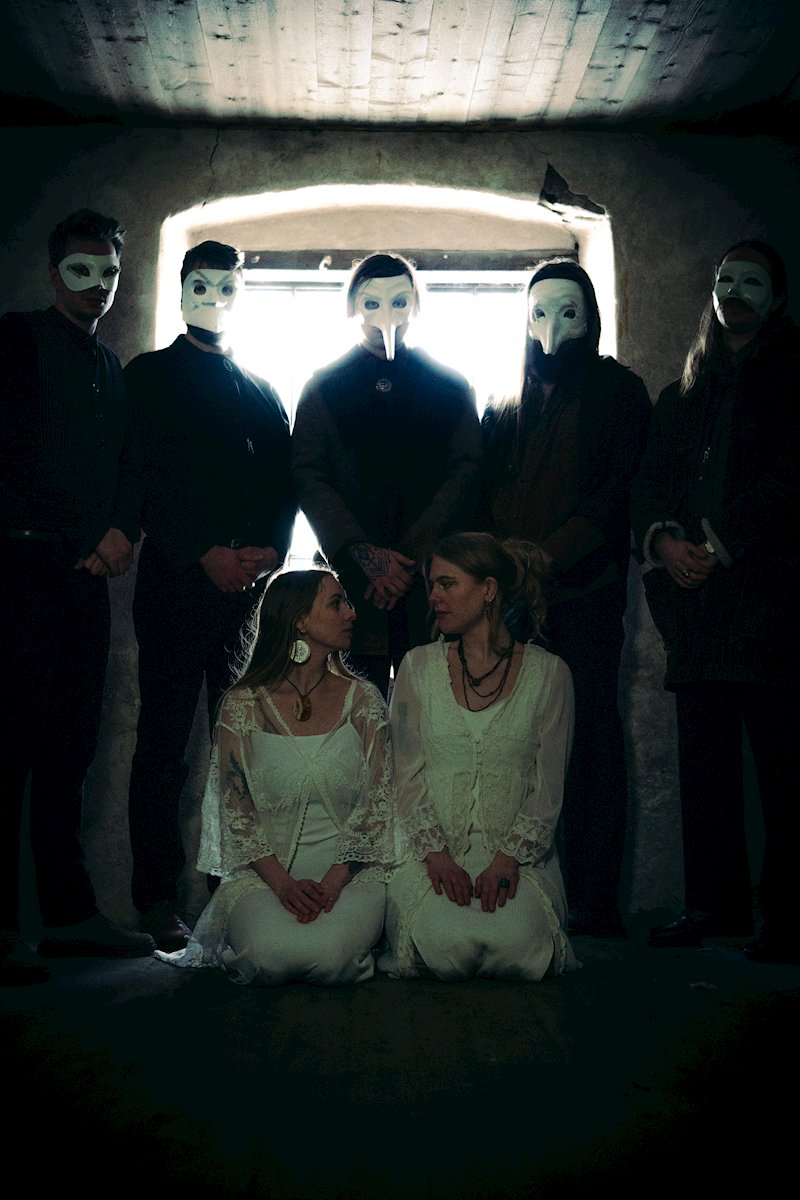
Sweden has no shortage of bands capable of reviving the 1970s, whether in costume or sound, but Nephila are a little bit stranger. Formed in Gothenburg in 2016, the seven-piece combine psychedelic, progressive, blues, hard rock and folk with masks, mythology and theatricality. Their 2021 debut laid out the formula: Hammond organ, twin guitars, big grooves and two lead singers. It was nominated for Rock/Metal Album of the Year at Sweden’s 2022 P3 Guld Awards.
So five years later, has Huldra dared to mess with the formula?
Josephine Asker remains as an original vocalist, while Linn Edlund joined in 2024, replacing Stina Olsson. Rather than disrupting Nephila’s identity, Edlund’s arrival makes the two-vocalist approach feel even more central to their sound. Asker and Edlund circle, answer and collide like another pair of lead instruments, sometimes anchoring melodies and sometimes making the already huge choruses feel enormous.
That sense of doubling runs throughout the record: twin vocals, twin guitars and Johan Larsson’s organ filling the spaces between them. It is busy, but usually exhilarating.
The other major change is atmosphere. Nephila’s debut drew heavily from vintage psychedelic rock; Huldra moves deeper into the woods. Inspired by the Scandinavian legends of the Huldra, the beautiful and dangerous spirit of the forest, the album lyrically explores seduction, transformation and fear of the unknown. Recorded over three years, partly at guitarist Jacob Hellenrud’s studio and partly in a remote former orphanage in Lappnäs, it sounds appropriately haunted.
“Mother of the Woods” quickly establishes the scale with a wall-of-sound vocal chorus, while “In Her Hands” delivers one of the album’s fattest seventies grooves. Comparisons to Blues Pills, Lucifer or Graveyard make sense, though Nephila are a little more proggy and full of melodic exuberance to be called simple blues-rock revivalism.
“The Hidden Folk” may best capture what they do well. Its catchy chorus floats above heavier instrumentation, while the lyrics invoke the folklore fear of being bergtagen — taken into the mountain by supernatural beings. Like many of the songs here, the musical brightness contrasts with the lyrical danger.
“Ash Their Bones” raises the tempo, and the instrumental “Capercailles Hymn” offers a brief folk-dance clearing before the title track returns to the forest. “Huldra” is darker and heavier, built around a substantial riff and the sensation of pursuit. Asker and Edlund conjure both temptation and menace simultaneously.
“Solar Eclipse” is perhaps the album’s prettiest moment, allowing the vocals more space and proving that Nephila’s greatest strength is melody. “Living Grave” returns to muscular rock with a hint of Southern influence, while “F.I.N.N.” closes with the band in full flight.
If Huldra has a weakness, it comes from its maximalist abundance. Nephila rarely resist making an arrangement bigger, and guitars, organ, vocals and melodic flourishes sometimes compete for space. If you are looking for downtempo Sabbathy doom, you won’t find it here.
Still, calling Huldra retro worship misses the point. Nephila have taken the fuzz, Hammond and swagger of the seventies and begun building their own mythology. The twin guitars provide muscle and Larsson’s keys the vintage color, but Asker and Edlund truly distinguish the band. Their intertwined voices give Huldra an identity that increasingly feels like Nephila rather than their influences.
Huldra is bigger, darker and more confident than its predecessor. Occasionally it risks disappearing beneath its own ideas, but mostly Nephila sound like a band that entered the woods looking for a second album and returned with something ecstatic.